


LaChanze is a Tony Award-winning actress, producer, director, and President of Black Theatre United whose career spans nearly four decades on Broadway. She won the Tony Award for her unforgettable performance as Celie in The Color Purple and earned additional Tony nominations for Once on This Island, Trouble in Mind, and Summer: The Donna Summer Musical. This season, she returned to the stage as Lady Capulet in Shakespeare in the Park’s Romeo & Juliet.
As a producer, LaChanze has become one of Broadway’s most influential creative forces. Her productions include Topdog/Underdog, Kimberly Akimbo, Here Lies Love, Jaja’s African Hair Braiding, The Outsiders (Tony Award for Best Musical), Buena Vista Social Club, Purpose, Other, and CATS: The Jellicle Ball. In 2025, she made her New York directorial debut with Alice Childress’ Wine in the Wilderness.
Her film and television credits include The Help, HBO’s The Night Of, The Blacklist, Law & Order: SVU, The Good Fight, Sex and the City, Disney’s Hercules, and the Emmy-winning Handel’s Messiah Rocks: A Joyful Noise. Upcoming films include Spike Lee’s Highest 2 Lowest and By Any Means, directed by Elegance Bratton and starring alongside Mark Wahlberg and Yahya Abdul-Mateen II. In 2025, she was honored as one of TIME magazine’s TIME Closers.
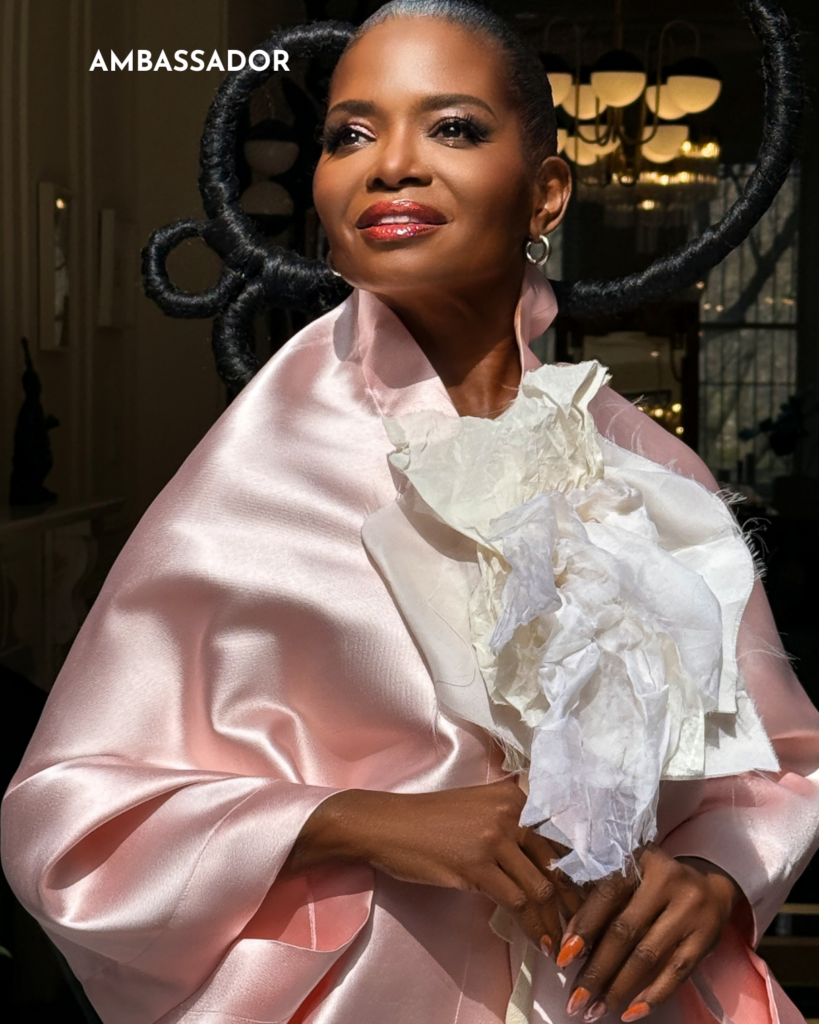
In 2024, she launched LaChanze Productions, dedicated to discovering and developing groundbreaking Broadway and commercial entertainment while championing the next generation of artists. A proud mother of two, LaChanze lives in Westchester, New York.
MUSA: A Tony award winning actress, and nearly 40 Broadway seasons, You’ve embodied so many powerful, resilient women—what responsibility do you feel in shaping how those stories resonate culturally.
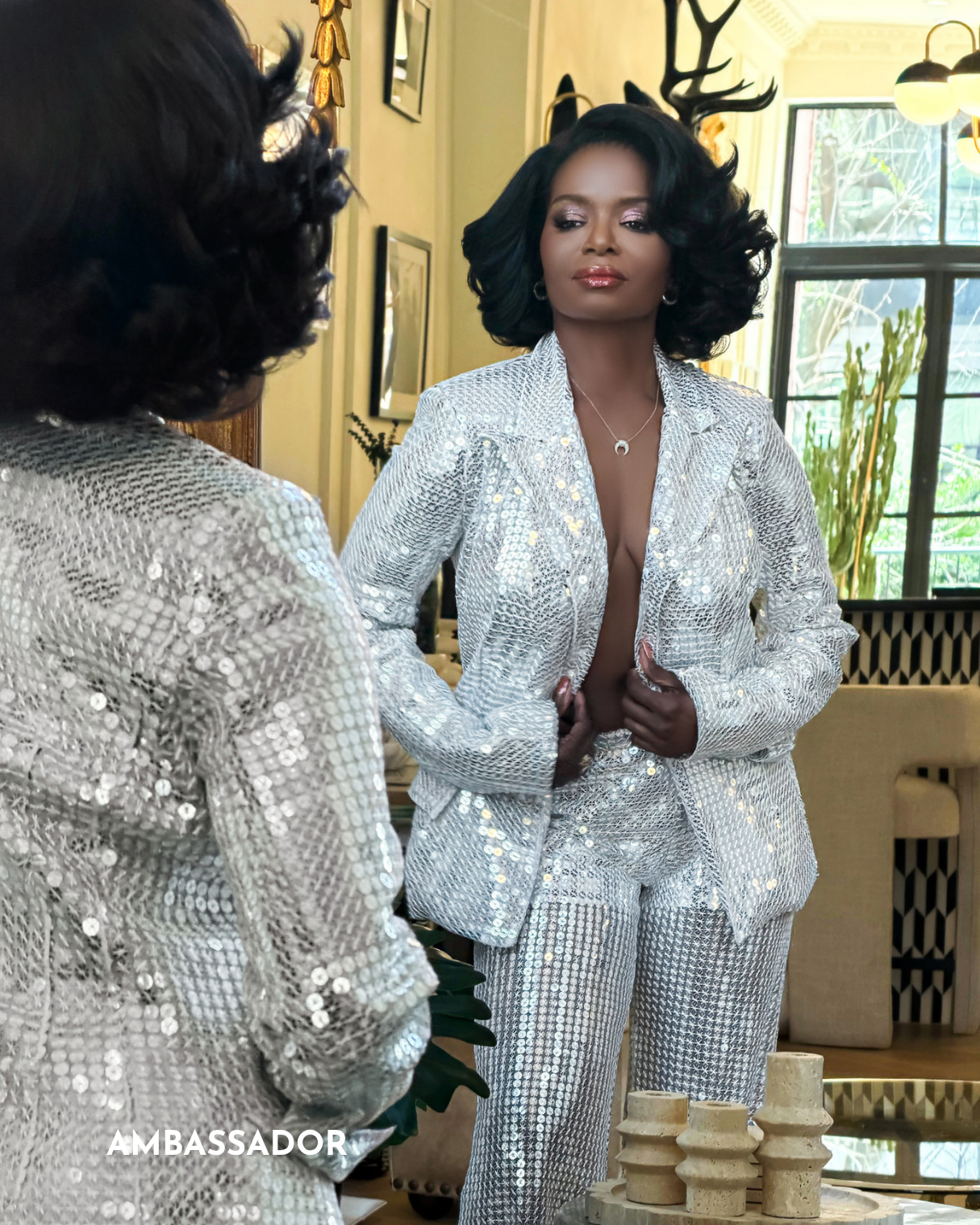
“I feel a responsibility, as one of the few Black female actors who achieved a certain level of success, to help the next generation by being an example of what you can do as a creative artist.”
MUSA: A Tony award winning actress, and nearly 40 Broadway seasons, You’ve embodied so many powerful, resilient women—what responsibility do you feel in shaping how those stories resonate culturally.
LACHANZE: During Covid, when I was sitting around like everyone else, I thought it was time for me to stop just sitting and waiting for someone to call me in order to live fully in the way I like to express myself. That’s why I stepped into producing. I feel a responsibility, as one of the few Black female actors who achieved a certain level of success in past decades, to help the next generation of women by being an example of what you can do as a creative artist in theater and as an actor. You have exposure to things you may not even realize, and all the knowledge you’ve gleaned over your time in the industry is applicable to so many other areas of our business.
MUSA: You’re developing a reputation for backing major hits—what instinct tells you a project has both artistic depth and commercial power?
LACHANZE: The first thing I consider is the temperature of society. What we’re feeling, what’s popular, what’s interesting, and where there are gaps in opportunity and development. I look at what’s selling. For instance, with Buena Vista Social Club, an Afro-Cuban musical on Broadway, and with the success of On Your Feet! and other Latin-centered productions, you would think it only has to appeal to one community. But even though the world knows Buena Vista Social Club, it’s the number one international album worldwide. The story of the people it came from has never really been told. So we thought there were two ways to access the audience: first, through the familiarity of knowing what Buena Vista Social Club is, and second, by celebrating a culture that has been largely marginalized, even though so many incredible artists come from it. Putting together a creative team that centers the heart of the people and the joy of the music is something we think deeply about, and I lead with that. If someone brought me a project about Southern segregation, for example, even though it’s a hot topic and people are discussing it, that alone would not necessarily sell. No one is going to pay over $100 to sit in a theater and feel preached to about something they can turn on and watch on TV. So I try to find themes and projects that are relevant to our current society, where there’s a gap in the industry, and where there’s a real hunger from audiences for that story to be told.
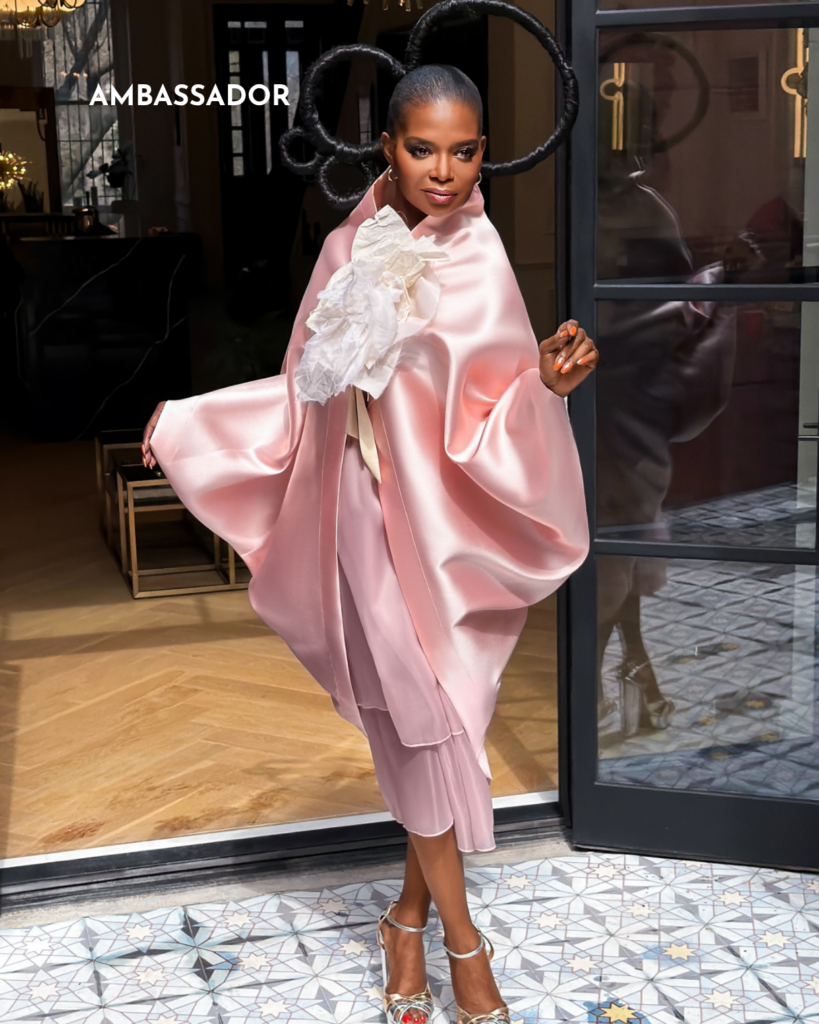
MUSA: You’ve said you’re “making Broadway cool” what does cool mean to you in today’s theater landscape?
LACHANZE: OK, so cool to me, as a Black American woman growing up in the ‘60s and ‘70s, meant that we had swag, we were relevant, we were leading the culture, we were making it accessible. Everybody sees the cool person as the one everyone wants to be around. I want my theater to be like that.
What I mean by making it cool is making everyone feel seen in theater. I want everyone to know that theater is not just for the elite community of people who can afford it, but that every person’s story is valid and deserves an opportunity to be seen on stage. Because there’s nothing like the visceral interaction between a cast and an audience, where you sit next to someone you don’t even know and you’re both laughing and crying together. It’s a moment of shared humanity, and it rarely happens. It only happens in live entertainment, in life, or in the arts, where people are together. If you go to a museum, a sporting event, or the theater, it’s all live. So we’re all experiencing this creative expression together, and that brings people together. It brings like-minded souls together, and we all have a moment of humanity together.
Which is why I select certain pieces to join. I want shows that are going to invite new people into the theater, help us see a slice of society that we may not have seen before, but that we can still relate to. I always use Jaja’s African Hair Braiding as that example for me, because what Jocelyn Bioh did, even though it was an immigrant story, was create something every single person in the audience could relate to. You never felt othered by being in that audience.
MUSA: As President of Black Theatre United, where are you pushing hardest for real accountability and lasting industry change?
LACHANZE: We have developed what’s called the “New Deal for Broadway,” which is a document. It’s not a legally binding document, but it does outline a list of tenets and agreements that we feel would help make Broadway more inclusive and accessible for all generations, races, and demographics. Historically, jobs in theater have often been passed down to whoever was coming next and whoever had access.
For instance, with crews or any of the other locals, they will often go to who they know needs a job. But we’re trying to determine ways, as Black artists, to say to the crew or the producers, “We would really like to have more people of color in hair and makeup when you’re working on bodies of color.”
One of Black Theatre United’s main goals is to make connection the pipeline connecting artists fresh out of college with mentorship programs. We’ve also gotten marketing companies to sponsor some of our students during the summer so they can come work within our marketing departments. A few of our founders Lisa Dawn Cave, Michael McElroy, and Karen Ford established what we now have coming up called the Black Design Collective Expo, where we’re pairing Broadway designers with up-and-coming college designers to talk about tools, mentorship, and opportunity. Hopefully, we’ll also see new Broadway apprentices emerge from this program. So this New Deal is a living list on our website. It outlines the agreements and hopes we want to see for the future, and the signatories include nearly every Broadway theater owner, producer, and representatives from casting, costumes, and every department of the theater industry. They meet every month to discuss how we’re doing. We just added general managers to the conversations as well, so we can hear directly from them. They sign their names publicly and say, “We agree to these tenets.” That visibility is one of the ways we’re pushing for accountability.
MUSA: Tell us about Black Theatre United and the Shubert Organization coming together to honor a giant like James Earl Jones.
LACHANZE: Robert E. Wankel, the Chairman and CEO of The Shubert Organization, and Black Theatre United (BTU) recently dedicated a bust of the late, great James Earl Jones at the newly renamed James Earl Jones Theatre. We had a new bust built and designed to replace the one that was previously there, honoring James Earl Jones. It was purchased and paid for by BTU and The Shubert Organization.
“Ballroom is Black culture, and as a Black woman, I need to be out there advocating on behalf of my young Black queer artists so they can see themselves represented.”
MUSA: CATS: The Jellicle Ball reimagines Cats through the lens of ballroom culture—what drew you to a project that both honors legacy and disrupts it?
LACHANZE: Cats, the original Cats, while it ran for decades, was not always very well received critically. Audiences loved it, but it didn’t always get great reviews. When I went down to the Perelman and saw what JaQuel Knight and Bill Rauch created with this reimagining, I thought, “This has to go to Broadway.” So when the lead producer reached out to me and asked me to join as a partner on the project, it was a no-brainer for me. Ballroom is Black culture, and as a Black woman, I need to be out there advocating on behalf of my young Black queer artists so they can see themselves represented forward-facing. They need to see that this is part of our culture, and our culture also needs to see that someone from the culture is helping celebrate the joy that comes from it. There’s a whole community of people who don’t even really know what ballroom is.
So in our marketing, we do a lot of investigation and outreach because, truthfully, the LGBTQ+ community may know ballroom, but not everybody does. The church community may not know ballroom. A lot of people are familiar with it on some level, but not really, because historically the culture wasn’t promoted in mainstream spaces.
André De Shields and I spent a day at the Schomburg Center for Research in Black Culture looking through archival information about ballroom — where it started, how it started, and why it wasn’t considered mainstream at the time. But now it is mainstream, and we want to celebrate it.
And it just so happened that this radical reimagining that Bill and JaQuel came up with, alongside Omari Wiles and Arturo Lyons, the co-choreographers of Cats: The Jellicle Ball, really works. It’s kind of like lightning in a bottle, if you ask me. When I finally met Andrew Lloyd Webber on opening night, he said he couldn’t thank the producers enough for investing in this reimagining because, according to him, it received some of the best reviews Cats has ever gotten.
MUSA:9 Tony nominations for CATS: The Jellicle Ball how does that feel around a project as special as this one?
LACHANZE: It’s really wonderful that the Tony Awards saw and recognized the work and effort that our creative team put together to bring this to light. So we feel very satisfied that the work we’ve put in is being acknowledged in the form of these nine Tony Award nominations. Awards are fantastic, but when you take a moment to acknowledge two young choreographers, Omari Wiles and Arturo Lyons, who have never done anything on Broadway before, to say your first time on Broadway is worthy of a Tony Award nomination—that’s pretty special. So with that thrill, we’re proud and grateful that more people will hopefully pay attention to the fact that we received nine Tony Award nominations and come see our show.
We’re also working to make it much more accessible for the Ballroom community by putting the best seats in the house at more affordable prices. So yes, we’re really trying to make this as successful as it can possibly be.
MUSA: From stage to screen, including most recently a film with Spike Lee, how do you decide which stories are worth stepping into at this stage of your career?
LACHANZE: Well, you know my first love is theater. I’ve done film and television for a bit, but not significantly in terms of being highly visible. It really depends on the director and who I’m working with. A lot of times I might be offered a project and, when I hear about the director and look at their work, I sometimes choose not to do it.
Often I’ve been confronted with roles that, in my opinion, are stereotypical or reflect someone else’s view of what a Black woman is. I’d rather work with people who actually know, and who are not writing a story about a Black woman when they don’t know what it feels like to be one. Too often, you end up with two-dimensional characters.
These days, I say that the Black female roles that are out there are often limited—you’re either the detective, a side character, or the “side piece.” I find that when you let Black filmmakers and TV showrunners into the room, you get more authentic, layered work because the creative team understands the multidimensional experience of Black life in America and all the realities we navigate.
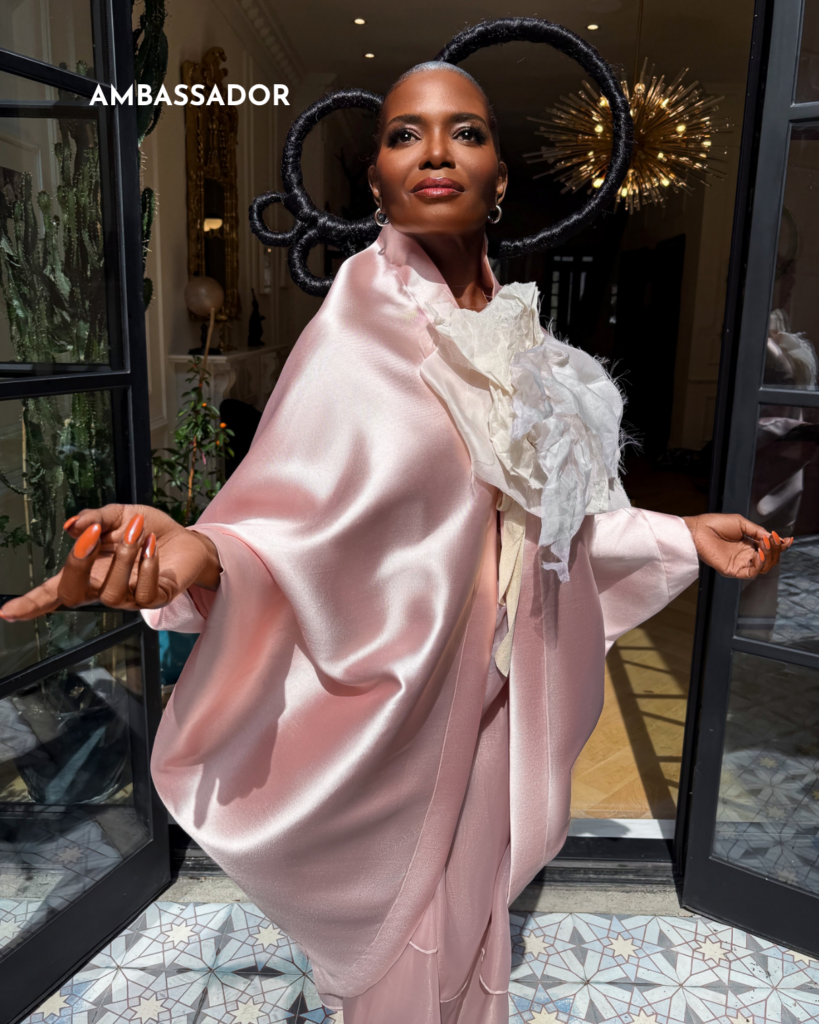
So I like to work with directors who understand that and who get that unspoken connection. I have an upcoming film coming out in September, written by Chester Algernal Gordon who introduced me to his partner director Elegance Bratton. They are doing incredible work, and their upcoming feature, By Any Means, has me playing Giancarlo Esposito’s wife. It was such a wonderful experience to be on set with Elegance because he’s the kind of director where I don’t have to explain myself. I don’t have to overextend to make the role work—he just says “go,” and I love that.
I’m also working with Saheem Ali at The Public Theater’s Romeo + Juliet as Lady Capulet. It’s Shakespeare, but Saheem is allowing me to bring myself into the role rather than taking on someone else’s version. My Lady Capulet is full of life and joy. She’s not hard or cold—she loves her daughter. She also loves to travel, so she and her husband are often away. My Lady Capulet is excited to be alive. That’s why the trauma is so devastating because she truly loves her daughter, and no one expected that loss.
I have two grown daughters myself, so I’m able to play it from that place.
MUSA: You recently directed Alice Childress Wine in the Wilderness off-Broadway—what drew you to that story, and how did stepping into the director’s chair expand the way you see storytelling and power on stage?
LACHANZE: Well, I think actors, for the most part, who work in theater make great directors because we have read so many scripts and have been directed by so many people. If you are sitting in the room and truly paying attention to what’s going on around you, you understand all the different elements. And if you are a creative—if you’re a visual creator, which I happen to be—when they offered me this opportunity, I said yes before I even knew what was going to be required of me. I just know that I can direct because of how much time I’ve spent on stage. And Alice Childress, personally, as a producer, I believe her work has not been given its full opportunity to be expressed in the way that, for example, August Wilson’s work has. But her work is just as powerful as Wilson’s. It is incredible. So not only did I say yes because I want to be a part of Alice’s work and bring it to the stage as truthfully as I can, but also because I wanted to stretch myself a bit more and allow myself to be that voice in the room that helps pull all the elements together. And yes, I was nervous and scared and dealing with imposter syndrome at times—especially knowing so many directors I know and deeply admire but at the same time, I had the confidence that I can do this. So yes, it was a thrill, and I’m excited to be doing it again at the Playhouse in Los Angeles in Spring of ‘27.
MUSA: You experienced the loss of your husband during 9/11 while raising two beautiful daughters. You were eight months pregnant with your second daughter and continuing to work—how did that shape your journey, both personally and professionally.
LACHANZE: I hadn’t planned on coming back to theater. I had decided I was just going to stay home and raise my children. I was a single mom, and I had to give birth to my second child alone. It was very traumatic and devastating, and I did not see myself working as an actor again. I felt like the prospect of that wasn’t fair to my children—because they had already lost their father. They couldn’t lose their mother too, so I had to be present.
But then I got a call from Eve Ensler, who now goes by the name V. She said to me, “You have too much to give our industry—you can’t just not do this anymore.” Three months after my youngest child was born, she offered me The Vagina Monologues. She said, “All you have to do is sit on a chair, read the monologues, and act them out while you’re up there. It’s the easiest job you’ll ever have. But I think if you get back on stage, you’ll get to come back to yourself.” And she was right. I credit her with getting me back on stage.
MUSA: After decades of excellence, what still challenges—or even scares—you enough to keep you evolving as an artist and leader?
LACHANZE: Shakespeare, I’ve always felt like I could never do it. I’ve been intimidated by it, and I thought I would never be able to tackle it, but it’s Shakespeare. So I felt I would be safe stepping into it. And it is terrifying. I feel scared and nervous, but sometimes when you are nervous and scared, that’s when you do your best because you’re really focused. So I just love a challenge. I love to push myself. I love learning. I am a voracious learner. I love, love, love learning. I’m very curious and very adventurous. I love exploring new things. I also trust my gut. If something feels hard for me, meaning the opportunity is difficult I pay attention to that. I go where I feel wanted. I go where I feel seen, and I put myself in rooms where I can be heard, because I think if I push in an area where I’m not wanted, that’s a waste of energy. And all we have is our energy and our time. That’s the most valuable resource in our lives, not even money, it’s our time. This is my time. And with the time I have on this planet moving forward, I think I’ve already lived longer than I believe I will live. I don’t think I’m going to live to be 120, but I do believe it’s time to do the things that truly satisfy me as a human being, and also as a creative artist and an advocate for the things I believe in and the world I want to live in.
Digital Credits :
Talent: @lachanze
Creative Director/ Photography by marcbaptistephoto
Styling by @bdrsyling
Makeup by @greggbrockingtonbeauty
Hair by @iamstacygray
Producer & Interviewer: @iamMusaJackson
LaChanze Assistant: Jess DeLucia
Look #1
Sequined Suit: Frederick Anderson
Look #2
Pink Silk Morph: Epperson
Look #3
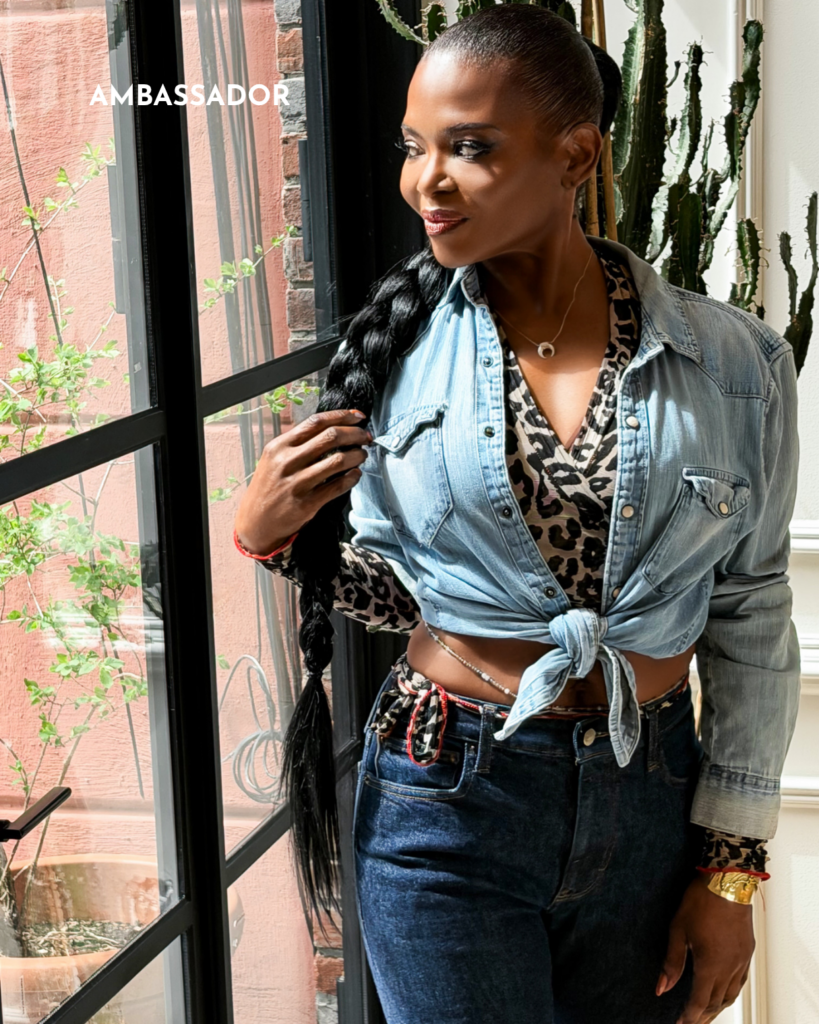
Denim: LaChanze’s own
Top: XulyBet
Look #4
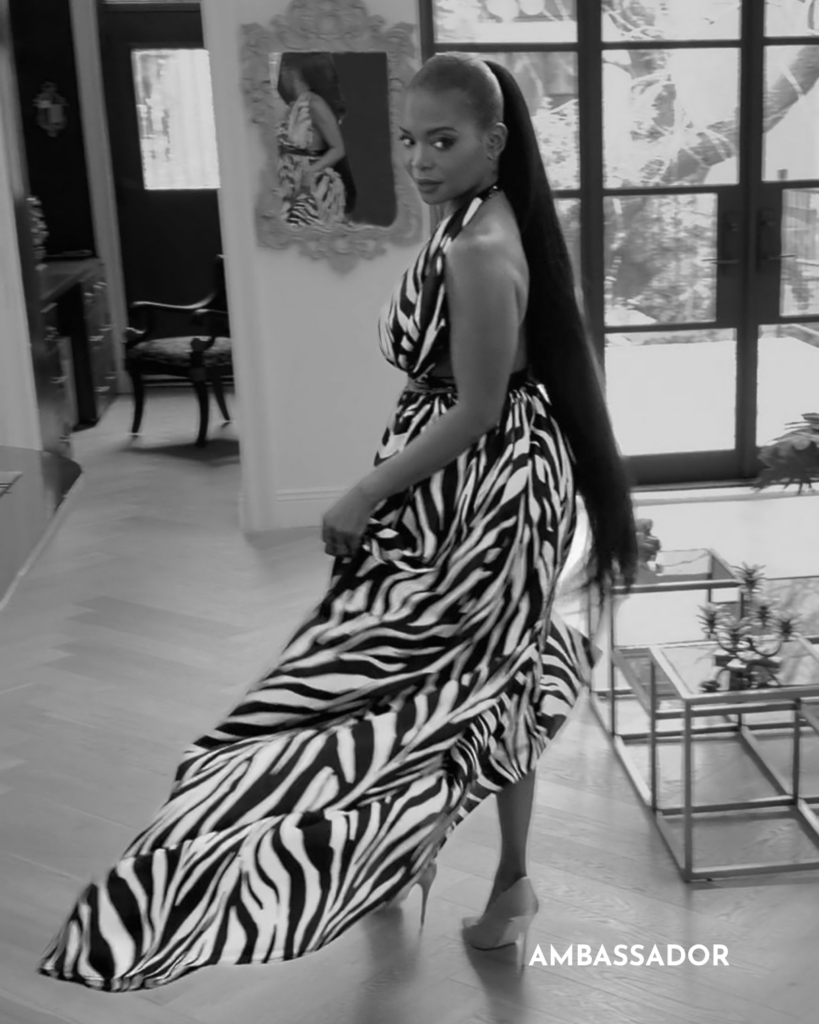
Striped Dress: Frederick Anderson
Location: Beautiful home courtesy of Douglas Hand
NY TEAM:
Founder & Editor In Chief:
Musa Jackson @iammusajackson
Creative Director: @marcbaptistephoto
Art Director/ Cover & Editorial Graphics:
Paul Morejon @Paulmorejon
FOLLOW US:
www.ambassadordigitalmag.com
IG: @ambassador_mag
YouTube: Ambassador Digital Magazine