

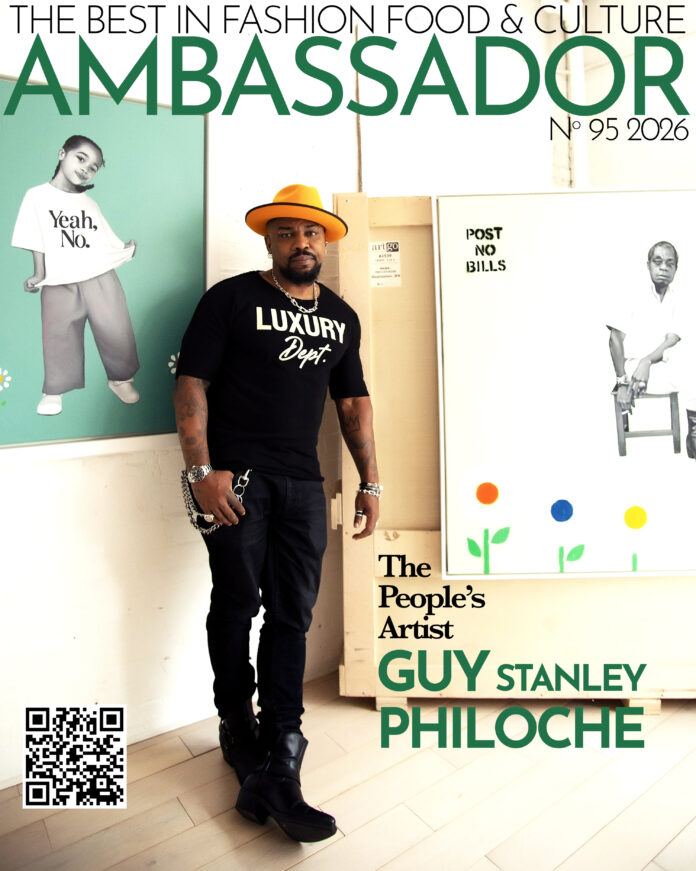
Ambassador Magazine Editor-in-Chief Musa Jackson sits across from Guy Stanley Philoche, a Haitian-born artist rooted in East Harlem, where the streets themselves have become both subject and sanctuary.
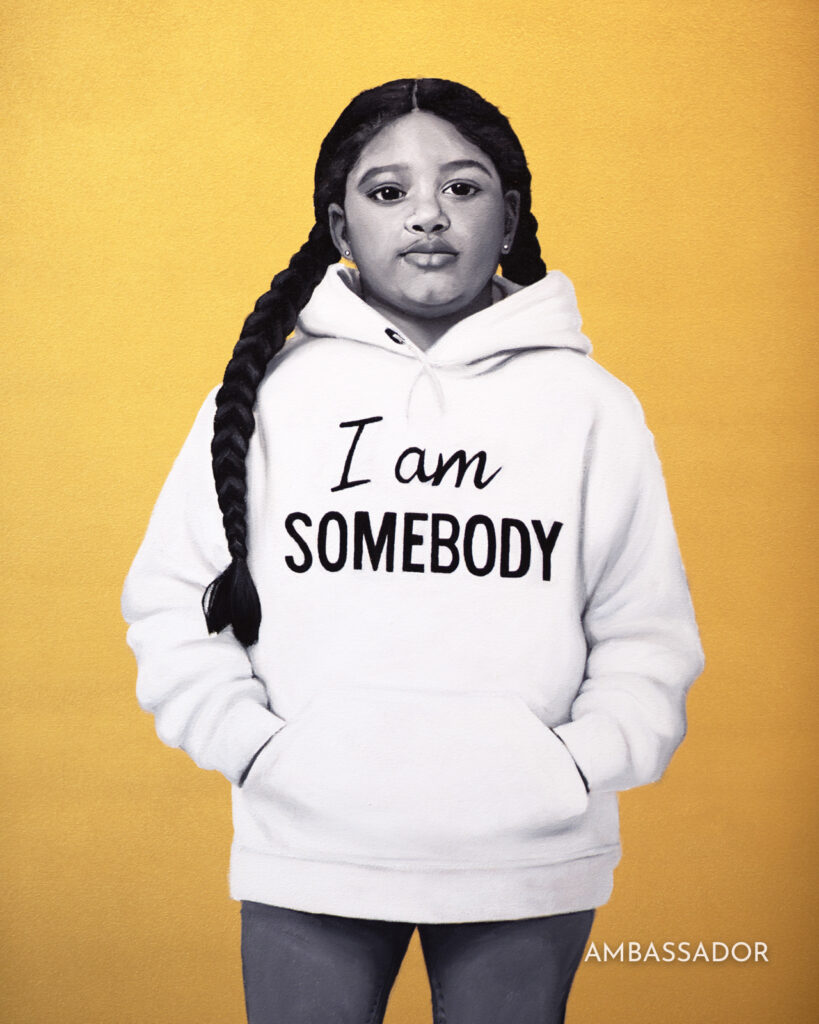
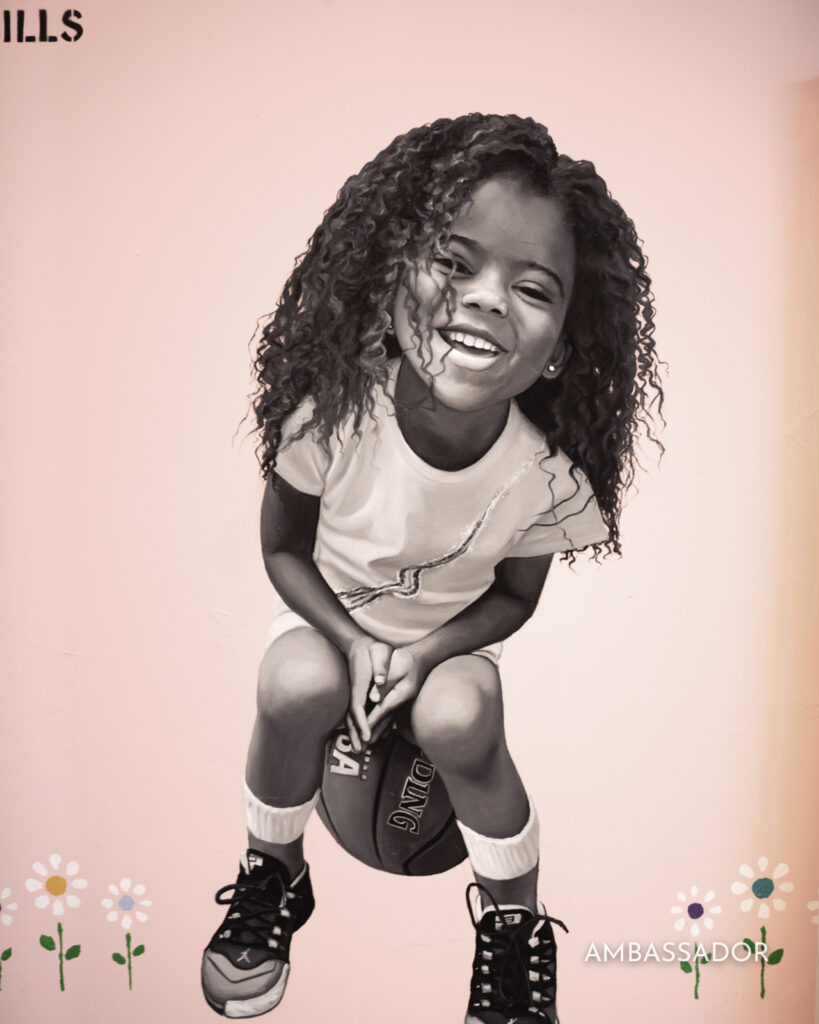
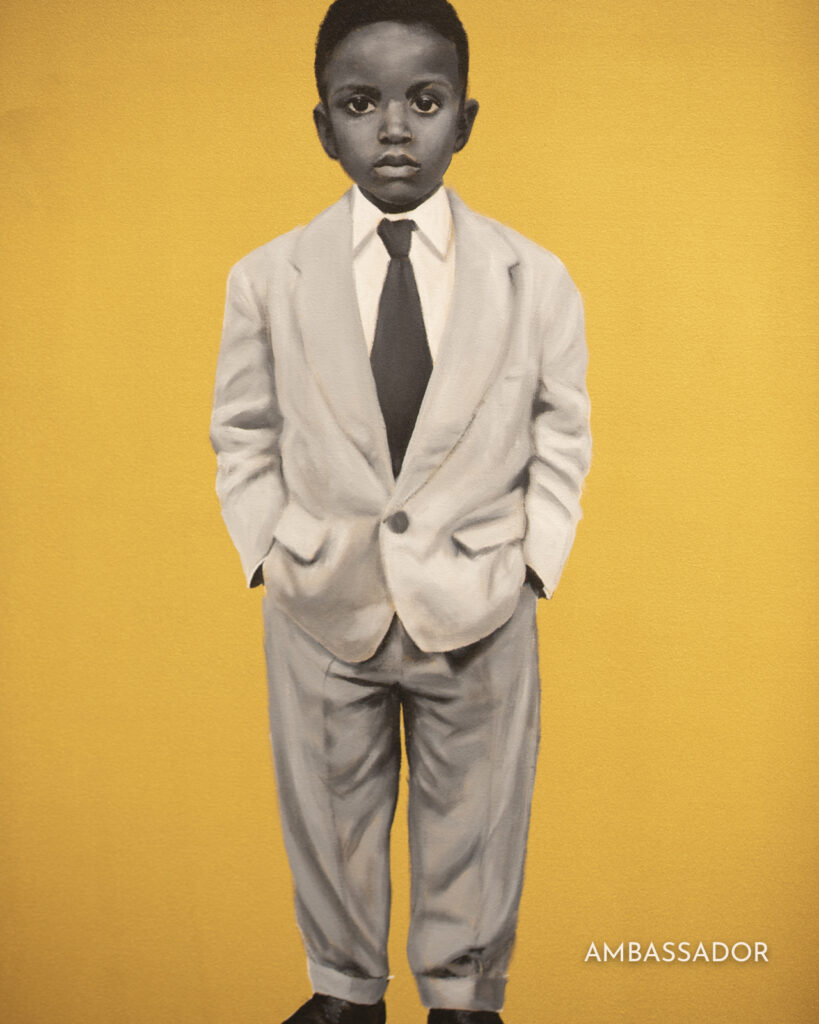
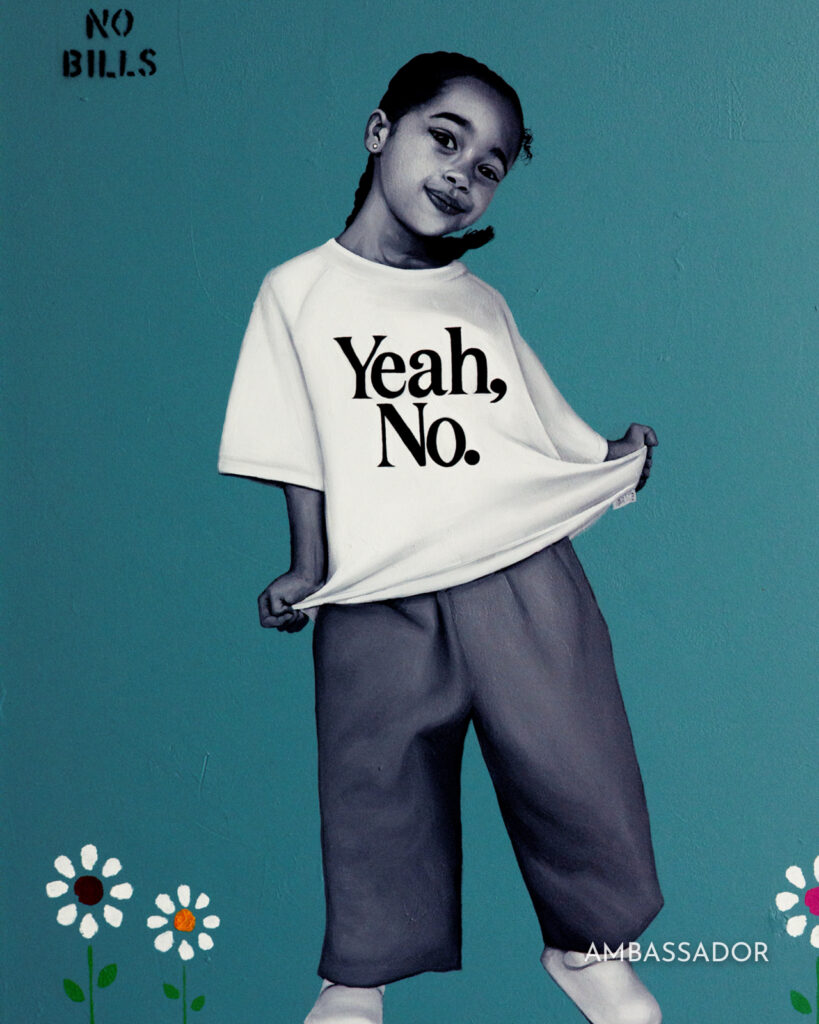
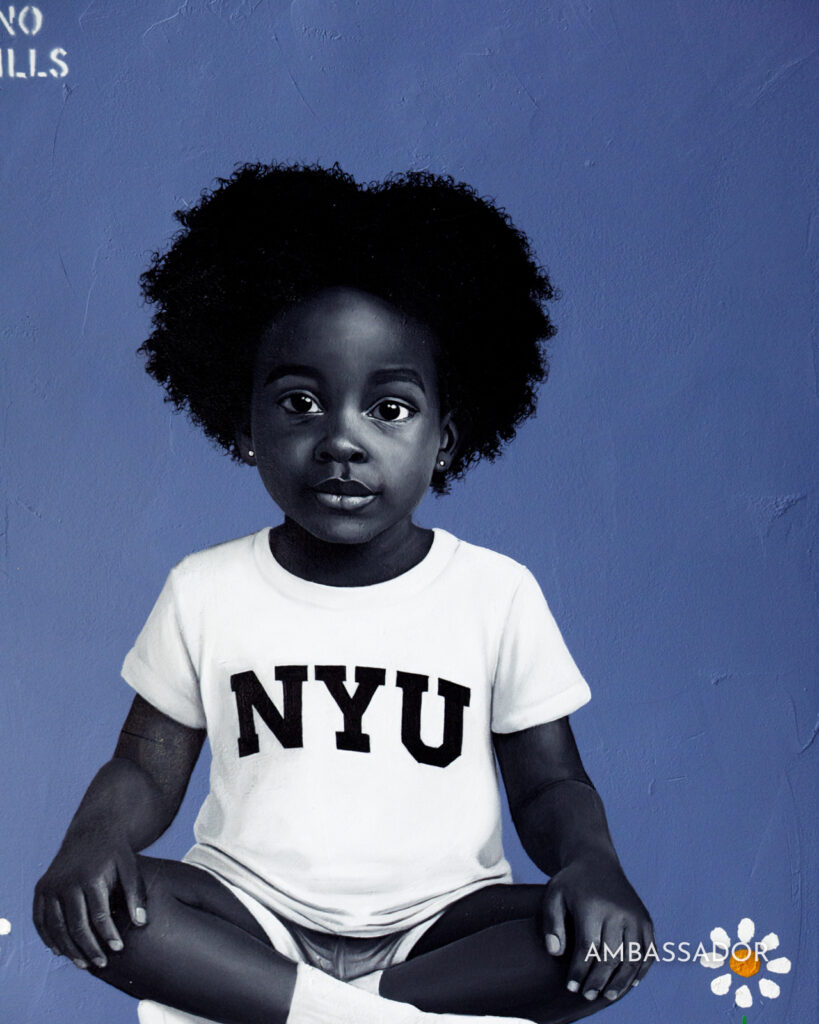
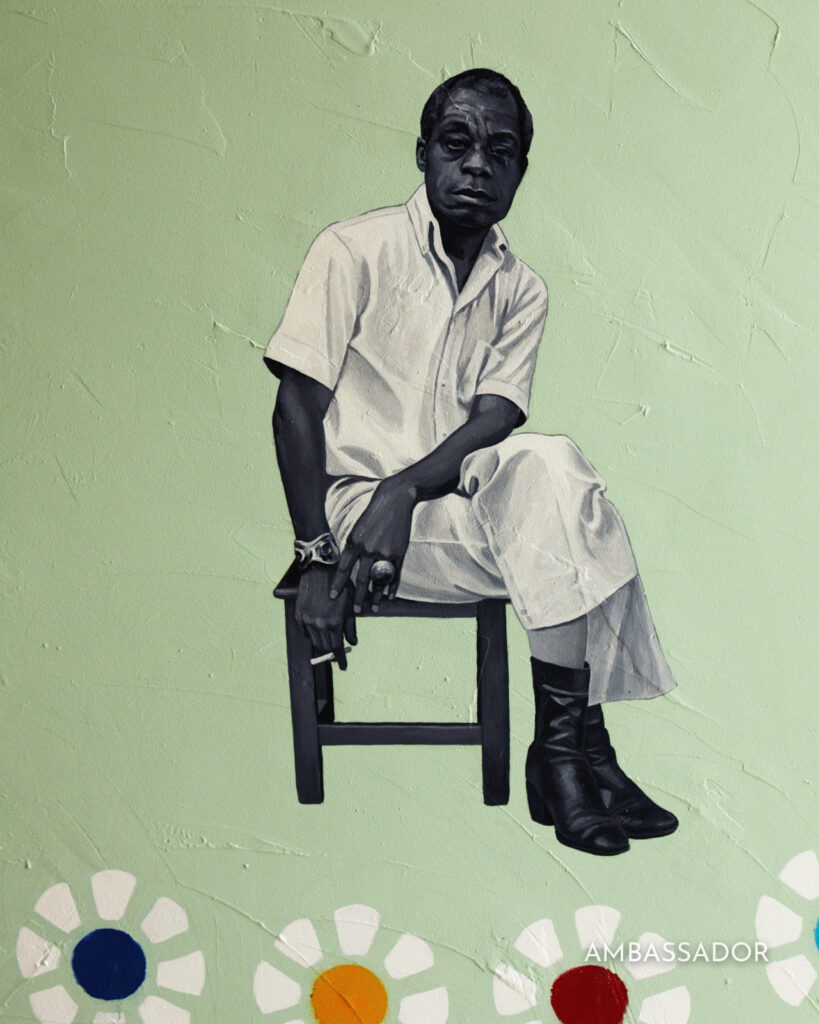
Guy Stanley Philoche paints with intention his figurative works centering Black subjects in moments of stillness, dignity, and quiet, undeniable power. Each portrait unfolds against bold, uninterrupted fields of color, stripping away distraction and forcing a singular truth: to see, and to be seen.
For over twenty-five years, Harlem has been his living studio. The children he passes, the faces he remembers, the energy of the neighborhood, all become part of a visual language rooted in observation, memory, and deep community connection. His work doesn’t just depict life it bears witness to it.
That vision has traveled far beyond New York. Philoche’s paintings now live in major private, public, and corporate collections, including Delta One LX, Google, Merrill Lynch, and Deutsche Bank, with recent acquisition by Omni Cultural
His collectors read like a cross-section of cultural influence— Chris Paul, Chris Bosh, Garcelle Beauvais, along with the influential Tisch Family.
In this conversation, what emerges isn’t just the story of an artist but of a man shaping how presence, identity, and legacy are seen, felt, and ultimately remembered.
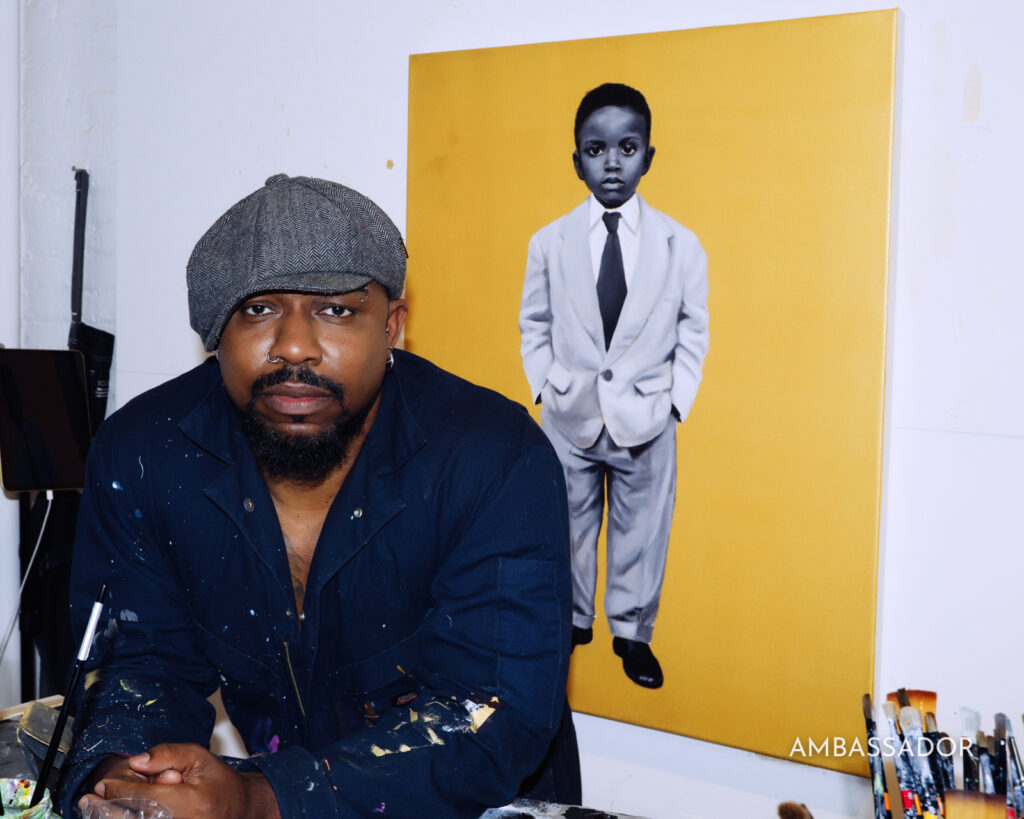
Your work captures quiet power in everyday Black life, what draws you to these moments of stillness and presence?
I think I’m drawn to those moments because they’re the ones we don’t usually stop to honor. There’s so much noise in the world about Black life, shaped by pressure, misunderstanding, and for many of us, the added weight of being immigrants, so much expectation, performance, and scrutiny, that the quiet moments get overlooked. But that’s where the truth is. That’s where you see someone just being, without having to prove anything. A lot of what I paint comes from what I see every day, especially living in Harlem. Kids walking to school, standing on the corner, waiting, thinking, just existing in their own space. There’s a kind of strength in that stillness that doesn’t need to announce itself. It’s not loud, but it’s undeniable. For me, those moments are about presence. About being seen without explanation. About giving weight to lives that are often rushed past or misunderstood. I want the viewer to slow down enough to recognize that power and sit with it.
You’ve spent over two decades in East Harlem. How has that community, and the children who inspire many of your subjects, influenced your work and worldview?
East Harlem shaped everything for me. It’s not just where I live, it’s where I learned how to see. Being here for over two decades, you start to understand the rhythm of the neighborhood, the resilience, the pride, the complexity. It teaches you to pay attention. The kids especially have had a real impact on me. There’s a certain honesty in how they move through the world. They’re still forming, still imagining, still becoming, but they’re also navigating real conditions around them. I relate to that deeply because I came to this country from Haiti as a young child and had to figure out where I fit. I remember feeling awkward, out of place, trying to understand how to belong. That stays with you. I see that same searching in them, and it finds its way into the work. Living here has grounded my practice in something real. It keeps me connected to community, to responsibility, to representation. I’m not painting from a distance. I’m painting from within. And that changes how you approach everything, from the way you look at people to the way you choose to show them.
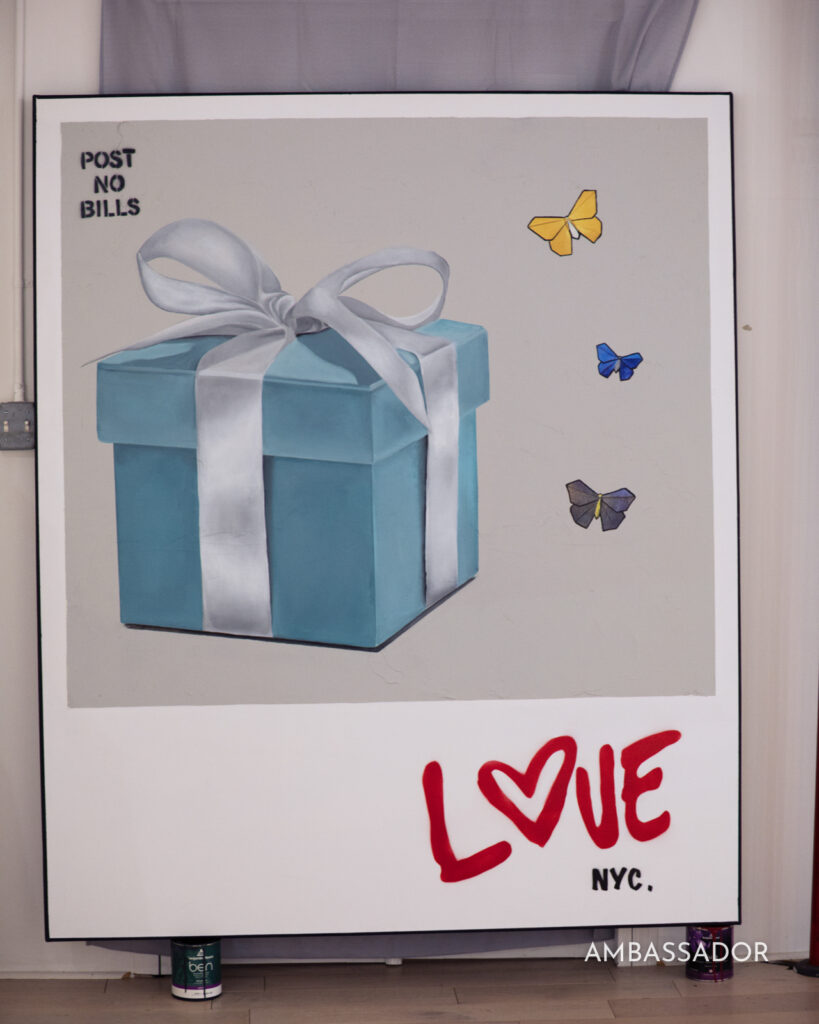
Post No Bills and the daisies are on all your work. Where did that come from and what’s symbolism if any?
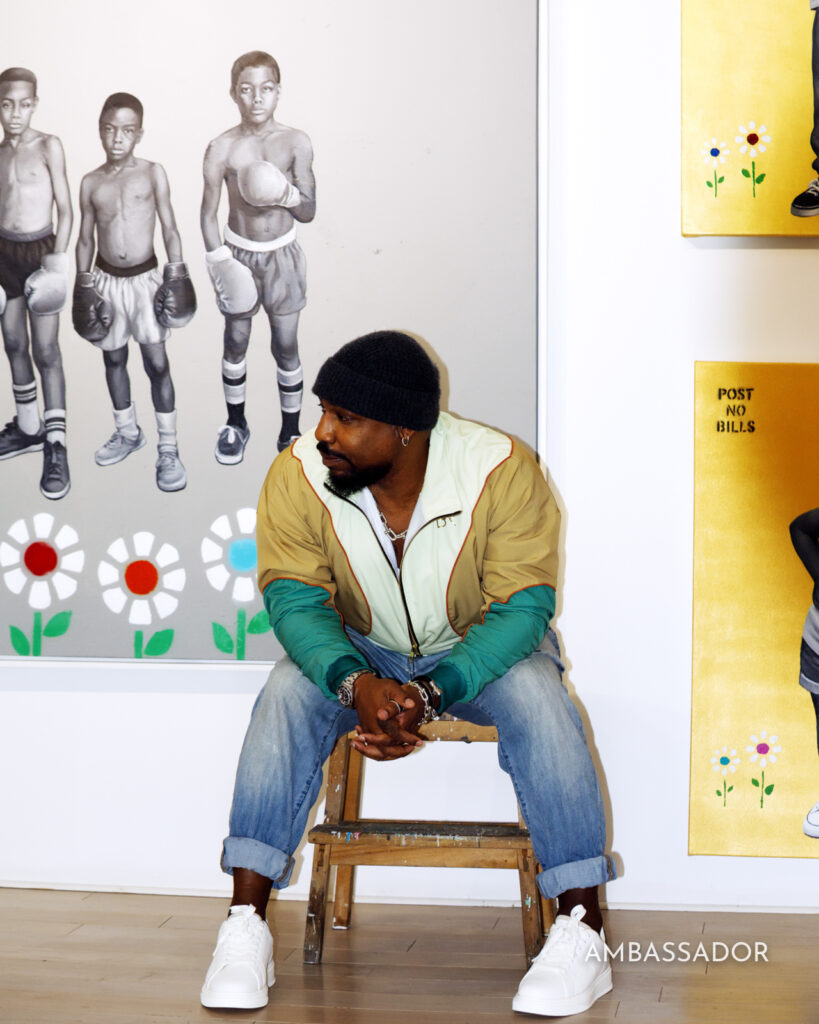
Post No Bills comes directly from the streets of New York. You see it everywhere, on construction sites, on boarded up buildings, these warnings not to cover what’s already there. For me, it became something else. It sits in the top left corner of every painting as a reminder that the image should not be erased, that the Black body must remain visible. It’s also a nod to street art, which has always been part of my visual language and how I understand public space. The daisies come from a more personal place. They are my mother’s favorite flower, and they are often the first flower a child learns to draw, so there’s something simple and familiar about them. At the same time, they carry a lot. They speak to giving people their flowers while they’re here. It’s about acknowledgment and memory. There’s a softness to them, but it’s intentional. They show up as a kind of offering. Together, those two elements hold a balance. One insists on visibility, the other offers recognition.
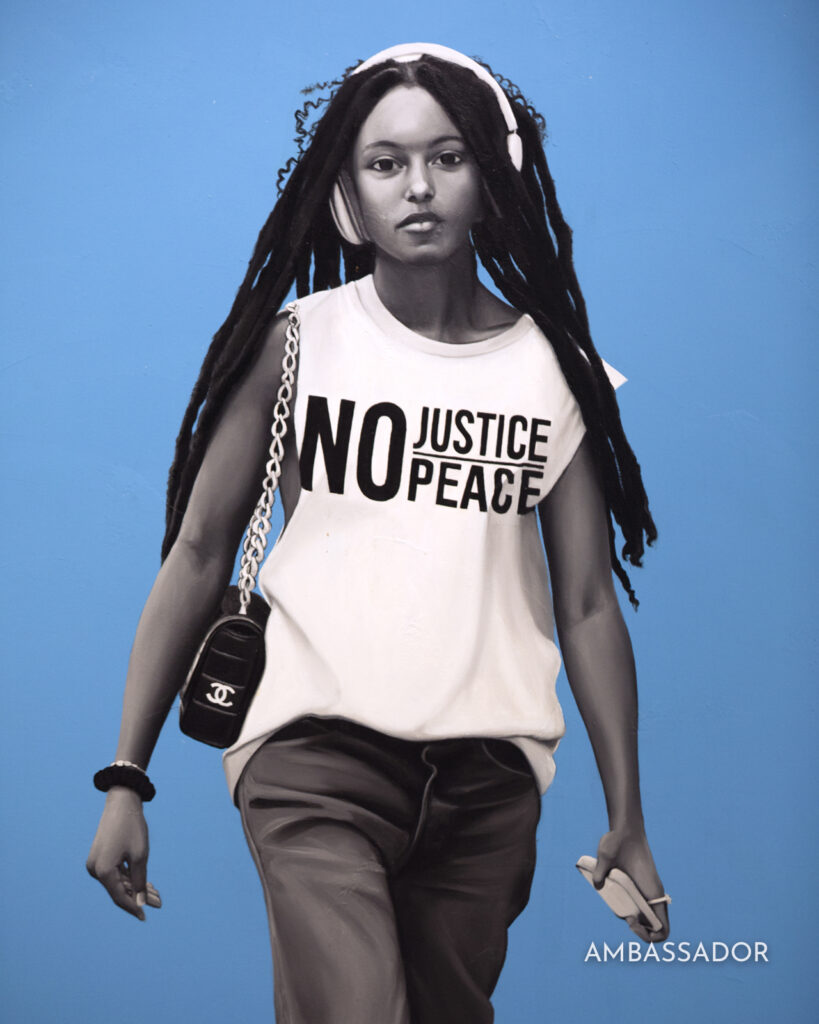
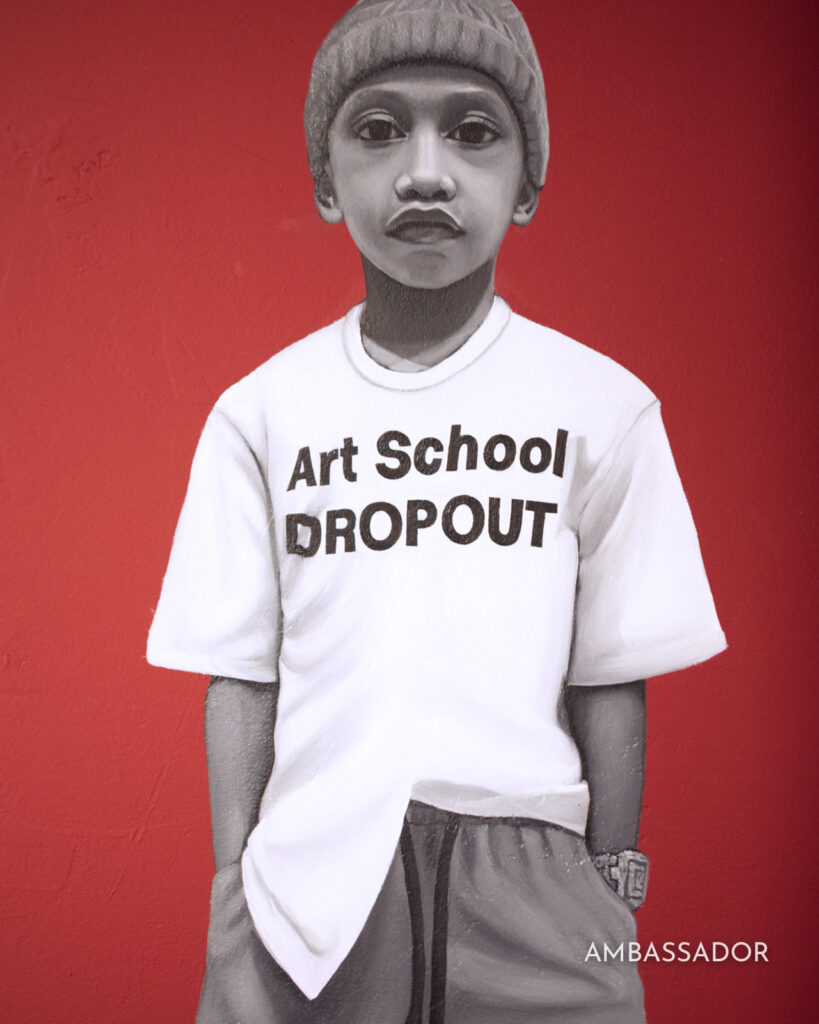
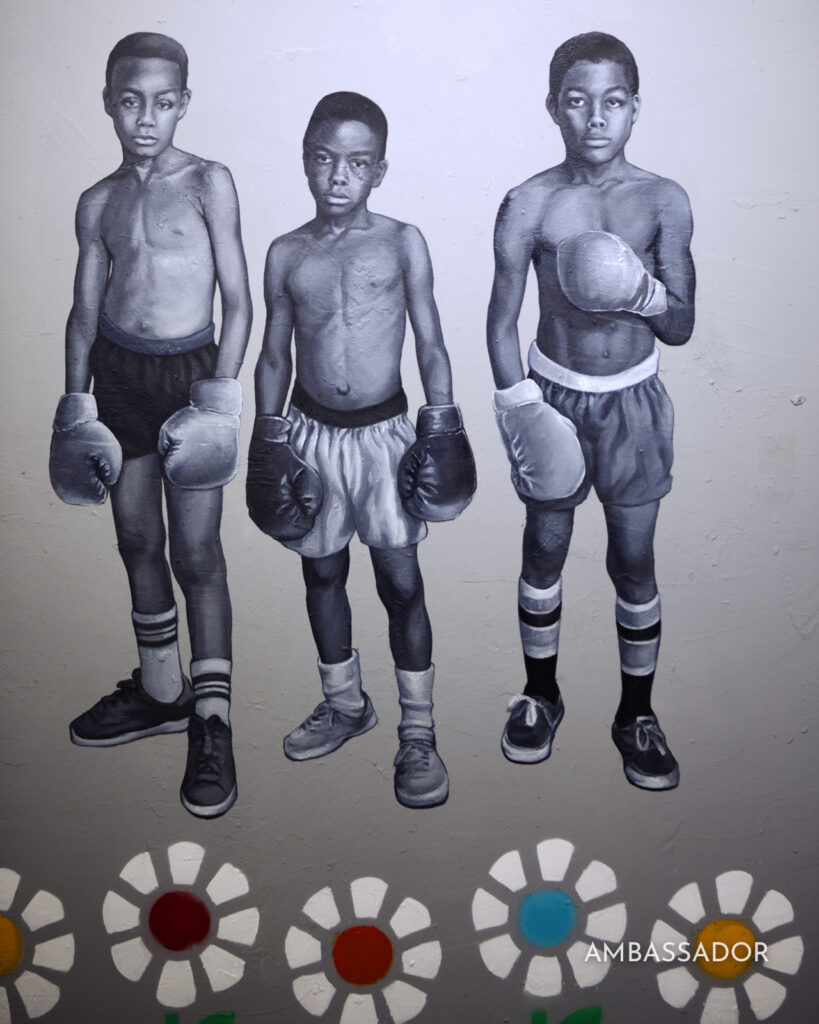
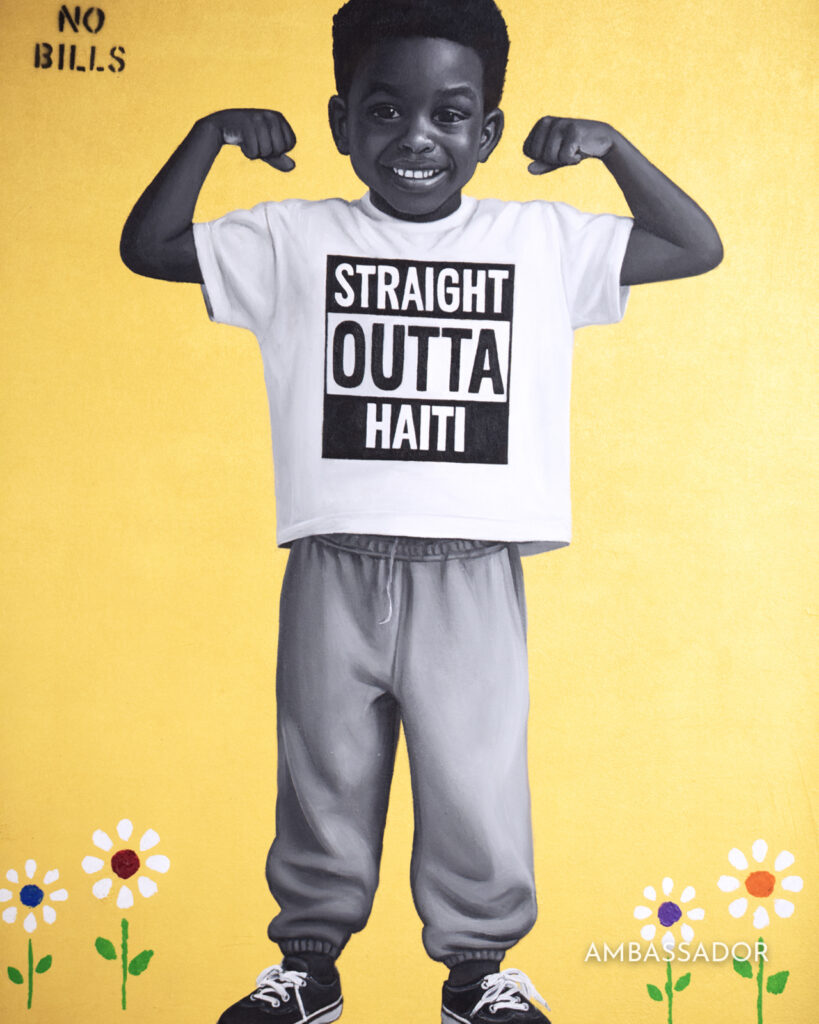
Your portraits are set against bold, minimal backgrounds, how does color shape emotion in your work?
Color does a lot of the emotional work in my paintings. When I remove the background and reduce the space to a single field of color, that color becomes the environment, the atmosphere, the feeling around the figure. It holds the weight that a setting would normally carry. I think about color intuitively, but also very deliberately. A deep red can carry tension or urgency,
a blue can feel reflective or calm, a yellow can hold warmth but also intensity. It’s not just about what looks good, it’s about what the figure needs in that moment. The color has to support the emotional state of the subject without overwhelming them. By simplifying the space, I’m asking the viewer to focus on the person first, but the color is always there, shaping how that person is felt. It’s subtle, but it’s doing a lot.
What does it mean to you to create images where your subjects are fully seen, without explanation or compromise?
It means everything. For a long time, images of Black life have come with conditions. There’s often an expectation to explain, to justify, or to frame the subject in a way that makes them easier to understand or accept. I’m not interested in that. When I paint someone, I want them to exist as they are, without needing to perform or translate
themselves for the viewer. They don’t owe you a story. They don’t need a setting to validate their presence. Just being there, fully, is enough. For me, that’s about respect. It’s about giving the figure the space to hold their own weight without interruption. And in doing that, I think the work pushes back against the idea that certain lives need context to be valued. They don’t. They already are.
How did your experience at Yale University School of Art refine or challenge your artistic voice?
At that time I was still working more abstractly, and Yale pushed me to be honest about what I was doing and why I was doing it. It wasn’t enough for the work to look resolved, it had to have intention behind it. You’re constantly being questioned, not just about your process but about your choices, your references, your responsibility as an artist. It’s also an incredibly competitive
environment, being surrounded by some of the strongest artists in your generation, and that forces you to really define your voice in a clear and uncompromising.
As your work enters major collections like Delta One LX, Google, Merrill Lynch, and Deutsche Bank as well as celebrities ie Chris Paul and George Clooney. How do you maintain authenticity amid growing recognition?
I stay grounded in why I started. None of that changes the core of the work. The same questions are still there, the same responsibility, the same connection to the community that shaped me. If anything, it makes me more aware of what’s at stake.
Recognition is a blessing, but it can’t become the motivation. The moment you start chasing that, the work shifts in a way that isn’t honest. I’m still painting the same kids I see every day, still thinking about the same experiences, still pulling from the same place.
For me, authenticity comes from staying close to that source. The work has to remain real before it becomes successful. If it loses that, then none of the rest matters.
What responsibility do you feel, if any, as an artist whose work reflects and uplifts Black life and how do you define success beyond exhibitions and acquisitions?
I feel a real responsibility, but I don’t think of it as pressure, I think of it as awareness. If you’re choosing to center Black life in your work, you have to be honest about it. You have to move with care, with intention, and with respect for the people and experiences you’re reflecting. I’m not trying to speak for everyone, but I am conscious that what I put out into the world contributes
to a larger picture. For me, success goes beyond where the work ends up. It’s about impact. It’s about whether someone sees themselves in the work and feels recognized in a way they might not have before. It’s about the kid who walks into a space and realizes they can exist in that way too.
Exhibitions and acquisitions matter, they create visibility and sustainability, but they’re not the whole story. If the work can shift how someone sees themselves or the world around them, even for a moment, that’s success to me.
Who were the artists that influenced your work?
I’ve been influenced by a range of artists, but the ones who stayed with me are the ones who communicate something real through the figure. Kerry James Marshall is a big one for me, the way he centers Black life without compromise and builds entire worlds around it. Jean Michel Basquiat also had a huge impact, especially in how he pulled from street culture and turned it into a language that felt urgent and personal. Barkley L. Hendricks has been especially important for me. The way he isolates his figures, gives them space, and lets their presence carry the painting really shaped how I think about my own work. Henry Taylor as well, the way he captures people in his life with honesty and immediacy, that sense of painting what is right in front of you. I’ve also spent time looking at Mark Rothko in terms of how color can carry emotion and create atmosphere. Even though the work is very different, that idea of using color as a feeling rather than just a visual choice stayed with me.
How important is Black artists to our communities and should Black be investing or collecting Black art.
Black artists are essential to our communities. We document what’s happening, we hold memory, we reflect back who we are in ways that don’t always exist anywhere else. A lot of our history, our stories, and our everyday lives live through the work. Without that, so much gets
lost, challenged, or told through someone else’s lens. And yes, I believe Black people should be collecting Black art. Not just as an investment, but as a form of ownership and preservation. At the same time, I understand that access has not always been there for us because of systemic barriers that limited wealth and opportunity. That is real. But collecting is still a way of protecting those narratives and shifting that reality, even if it
starts small. I try to be intentional about that in my own practice. I mentor emerging Black artists, and I have a personal philosophy that every time I sell a work, I buy a work from an emerging artist. It is about circulating value within our community. When we invest in our artists, we are investing in how our stories are told and who gets to hold them.
When someone stands in front of your work or hears the name Guy Stanley Philoche what do you want them to feel, and what legacy are you intentionally building?
I want them to feel something real. Not something forced or explained, just a moment where they slow down and connect. Whether it’s recognition, curiosity, or even discomfort, I want it to come from an honest place. I want people to stand in front of the work and feel like the subject is present with them, not as an image, but as a person. When people hear my name, I don’t just want it to be tied to paintings. I want it to stand for consistency, for showing up, for building something that extends beyond myself. The work is one part of that, but the legacy is bigger. It’s about how I’ve contributed to other artists, how I’ve supported the next generation, how I’ve created opportunities that didn’t always exist for me.
Digital Credits :
Talent: @guystanleyphiloche
Photography by @marcbaptistephoto
Styling/Creative Direction by @bdrsyling
Grooming by @paintedbyjsr
Producer & Interviewer: @iamMusaJackson
Publicist: Sandra Lajoie
Cover Look:
Luxury Tee shirt: BDR – The Confessional Showroom
Jeans: Guy’s own
Boots Zara
Hat: Guy’s own
Jewelry: Guy’s own
Look:
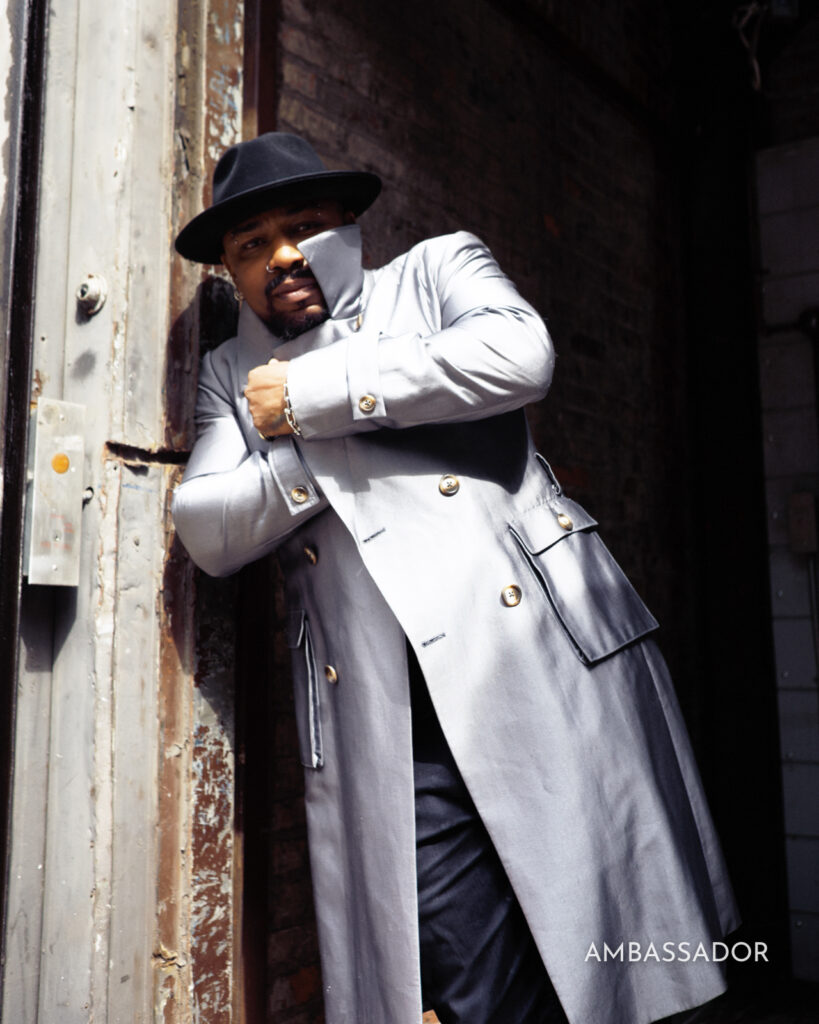
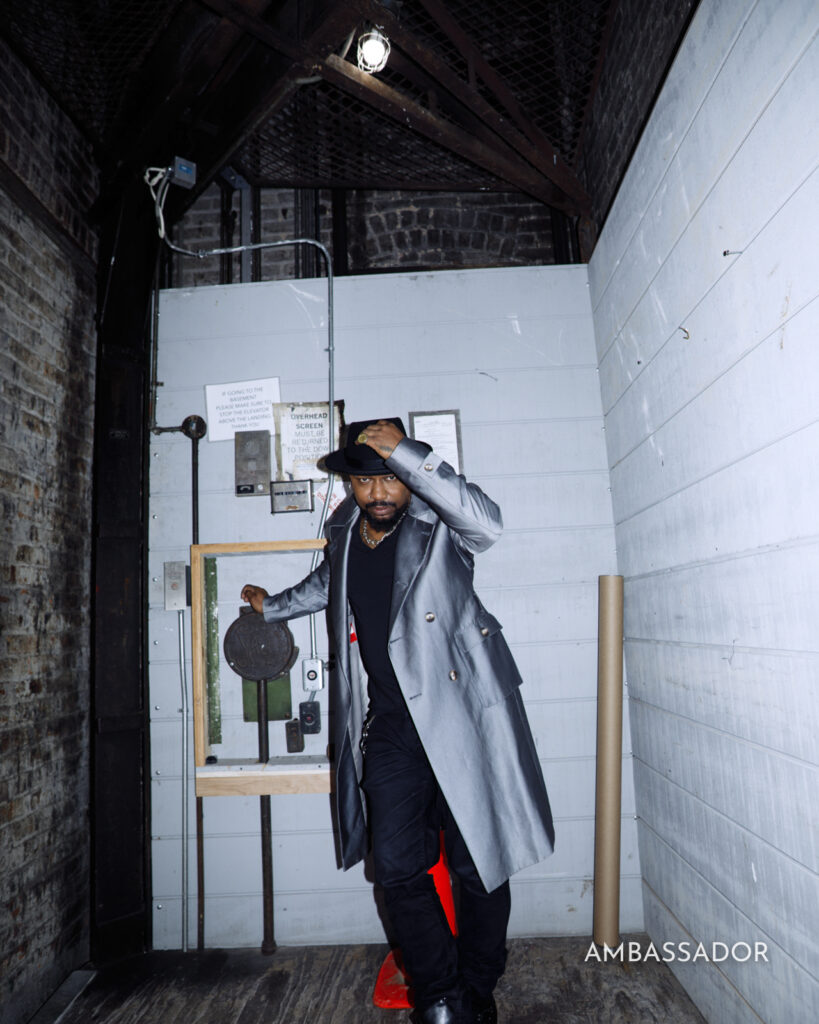
Coat: Grey Trench Catou Wear- The Confessional Showroom
Jeans: Guy’s own
V neck Tee: Guy’s own
Boots Zara
Hat: Guy’s own
Look:
Jacket: Multicolored Windbreaker – BDR- The Confessional Showroom
Jeans: Guy’s own
Sneakers: Zara
Look:
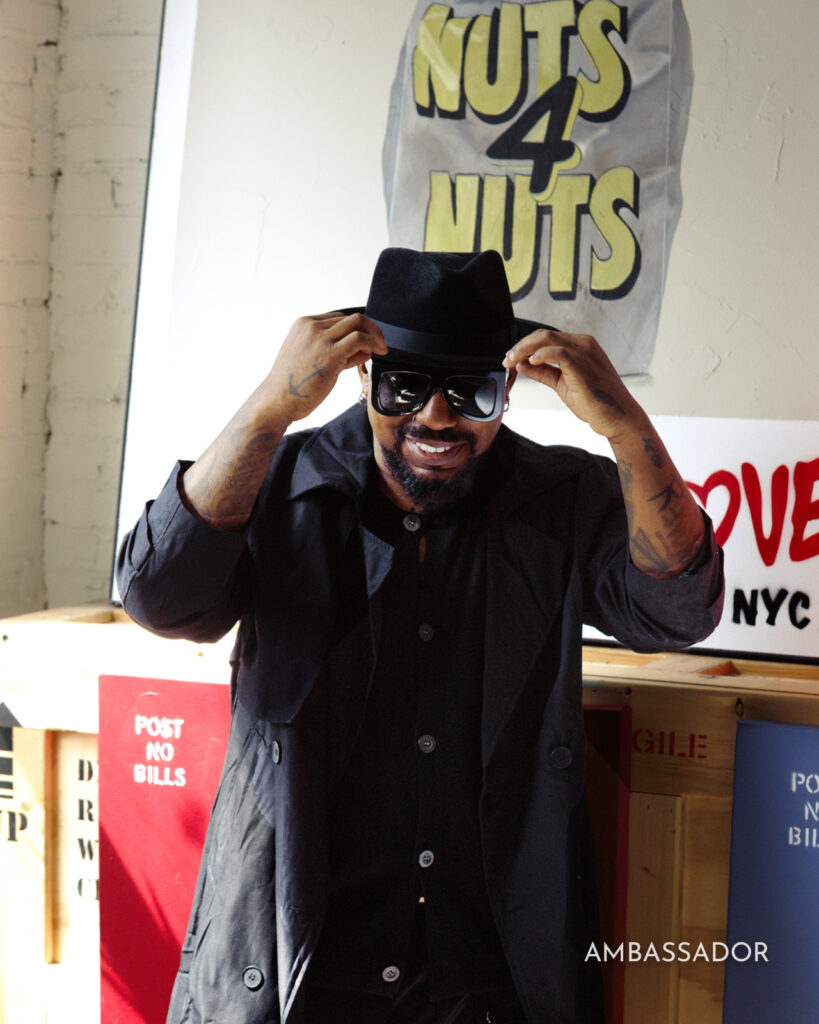
Coat: Black Trench coat – Sample – The Confessional Showroom
Shirt: Guys own.
Shades: Kazokou Lunettes – The Confessional Showroom
Hat: Guy’s own
NY TEAM:
Founder & Editor In Chief:
Musa Jackson @iammusajackson
Creative Director: @marcbaptistephoto
Art Director/ Cover & Editorial Graphics:
Paul Morejon @Paulmorejon
FOLLOW US:
www.ambassadordigitalmag.com
IG: @ambassador_mag
YouTube: Ambassador Digital Magazine
Facebook: Ambassador Digital Magazine